


Thanh Tien Paper Flower Village
Long renowned for its traditional paper flower making, the paper flowers here are entirely handcrafted, using bamboo, colored paper, and the skillful hands of artisans.
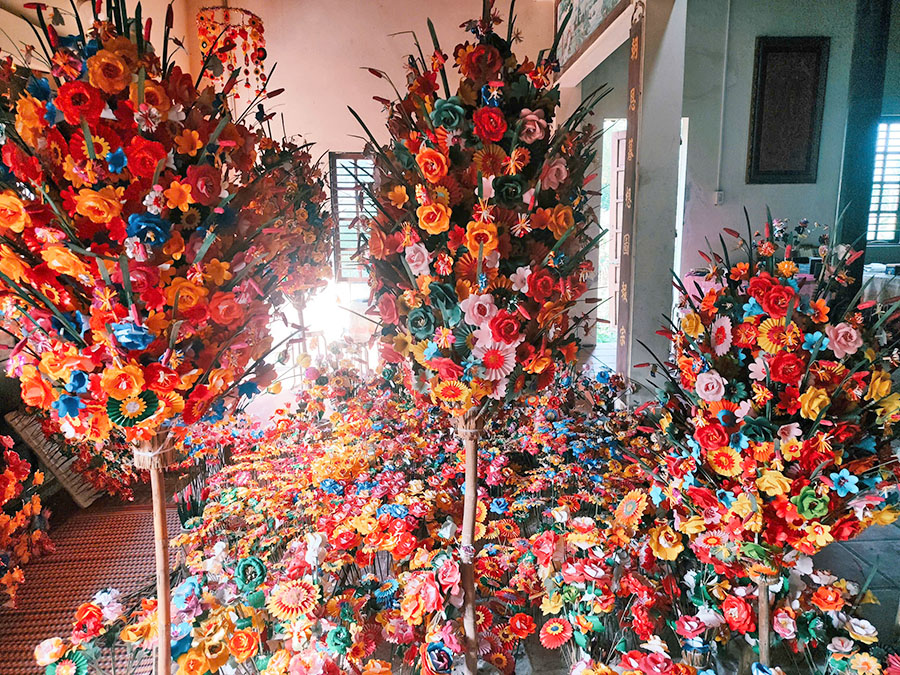
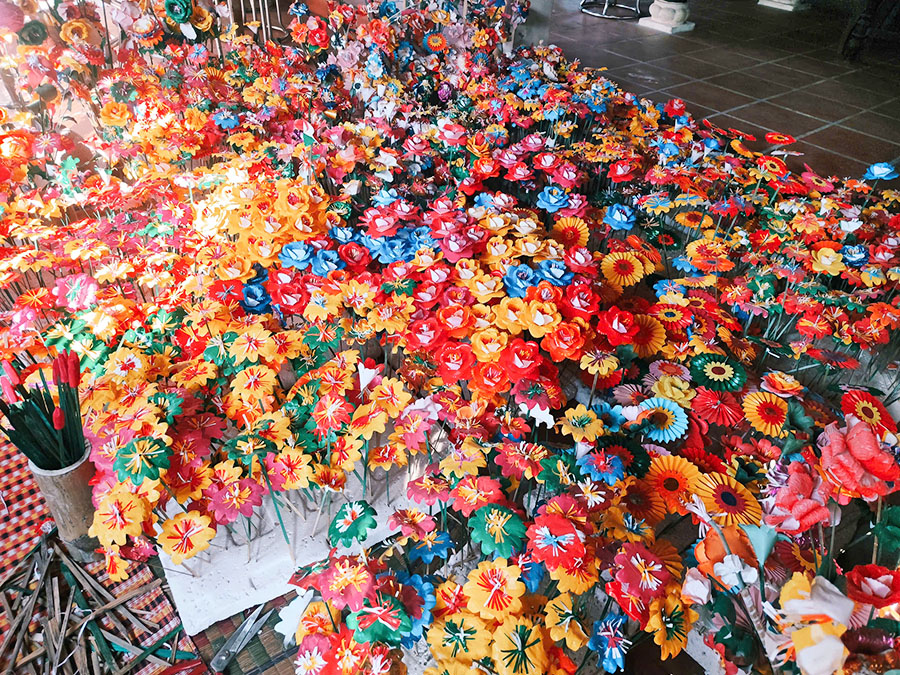
Thanh Tien paper flowers are not only for decoration but also carry deep spiritual meaning, often used during Tet (Lunar New Year) celebrations and ancestral worship. Each flower is a harmonious combination of bright colors and delicate shapes, expressing aspirations for a peaceful and prosperous life. The craft of making paper flowers is not only a livelihood but also a way for people to preserve tradition through generations.
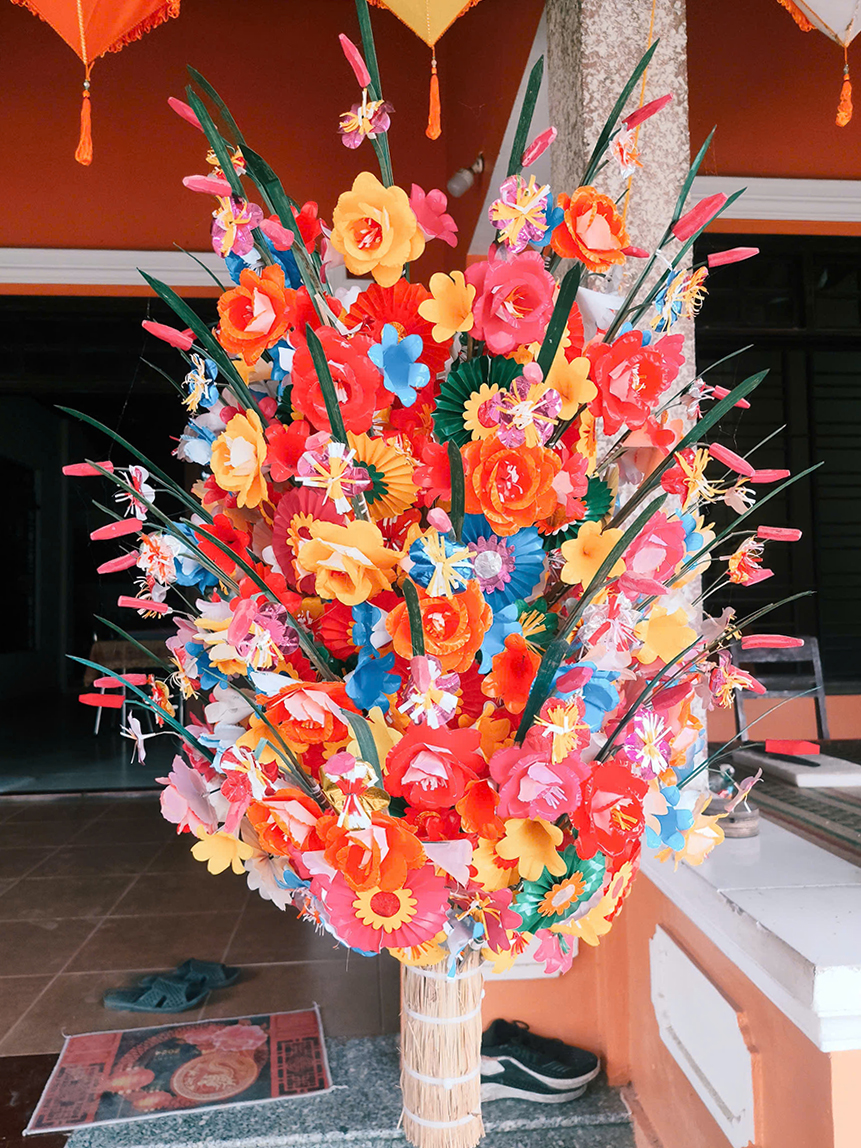
Five types of flowers—orchids, chrysanthemums, dahlias, roses, and sunflowers—are arranged skillfully to symbolize heaven, earth, and humanity.
Sinh Village paintings - a mark of folk beliefs
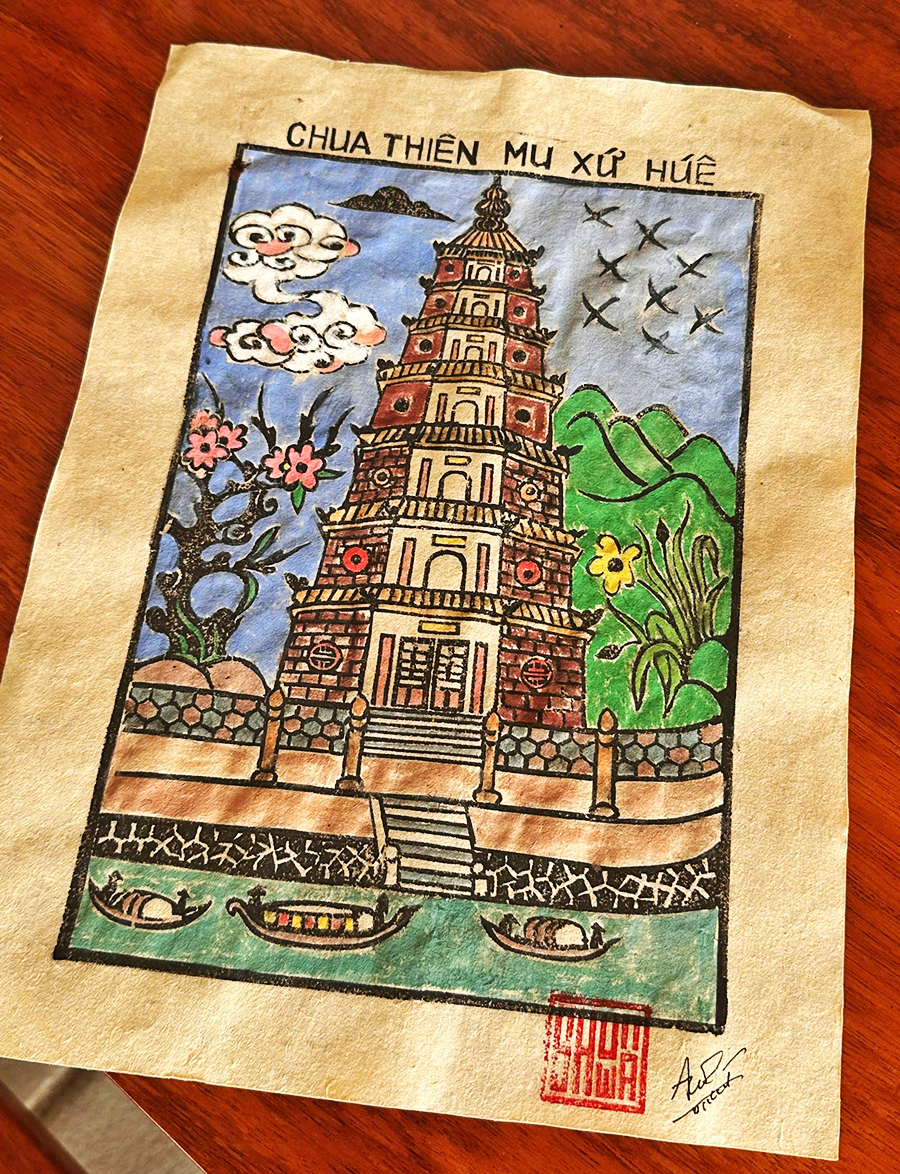
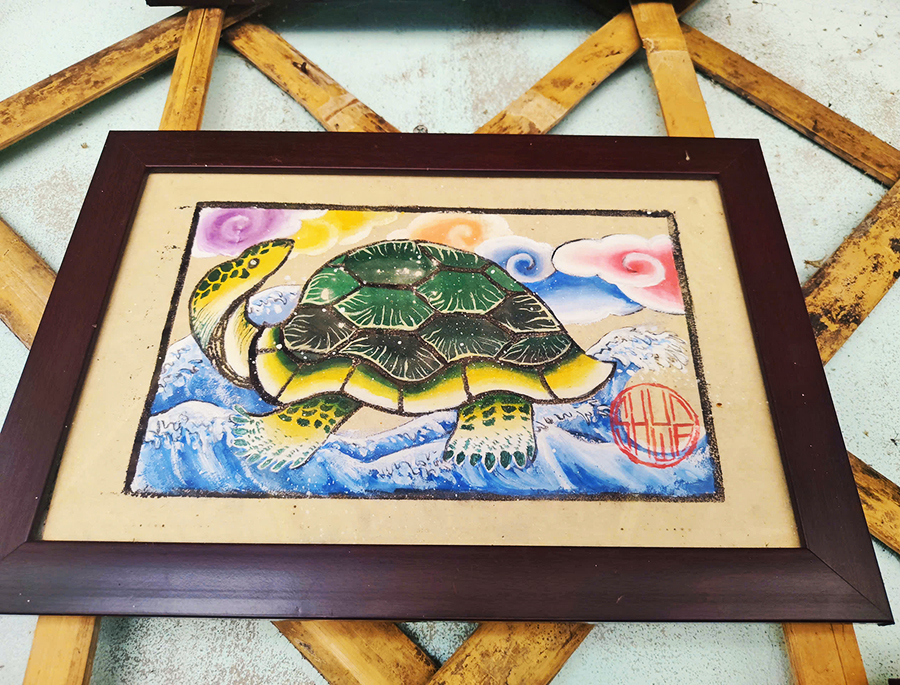
Sinh Village is famous for its folk paintings used in religious practices. Unlike Dong Ho paintings, which are more focused on decoration, Sinh Village paintings are primarily used in worship, prayers for peace, and warding off misfortune.
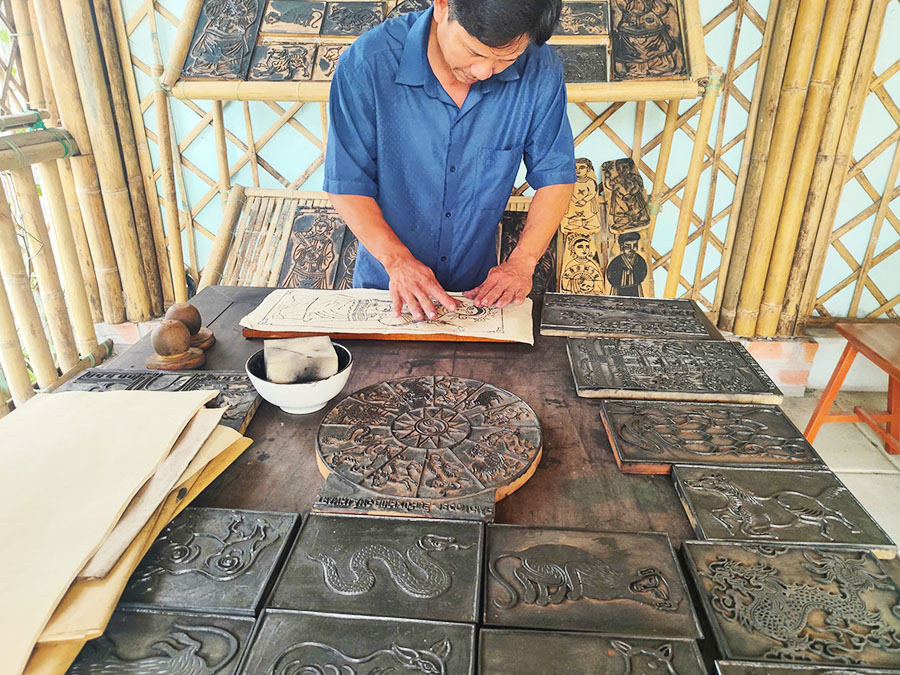
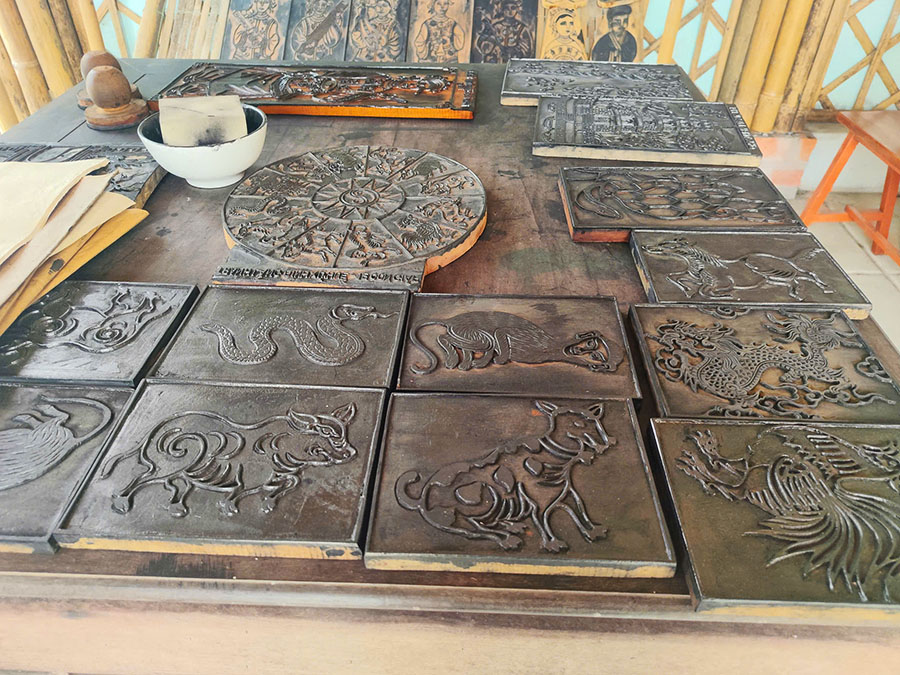
The paintings are printed from woodblocks and then hand-colored using natural materials. The images in the paintings are often simple but carry profound symbolic meaning, reflecting the rich spiritual life of the people. Through each painting, one can feel the interplay between art and belief, between daily life and the spiritual world.
Mung bean cake with fruit - the essence of royal court cuisine.
One of the unique features of Hue cuisine is the mung bean cake with fruit, a small, pretty cake shaped like various fruits such as oranges, tangerines, chili peppers, mangoes, etc.
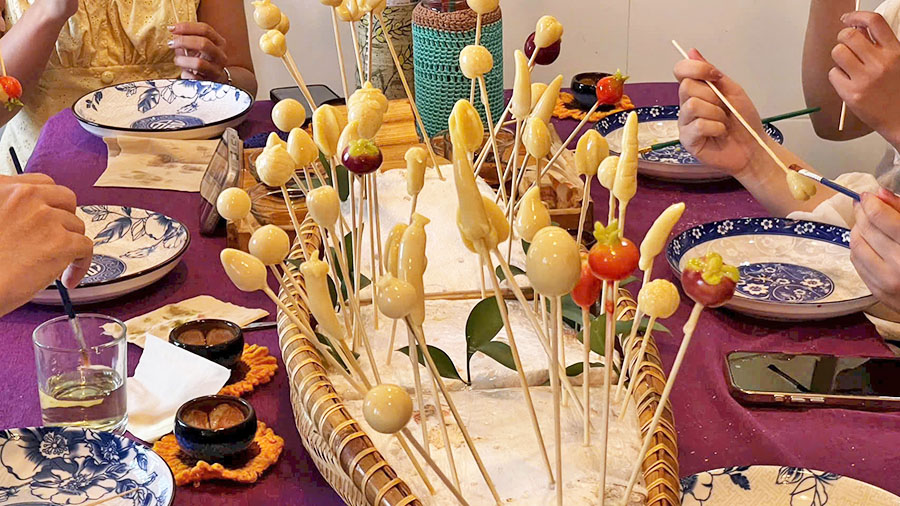
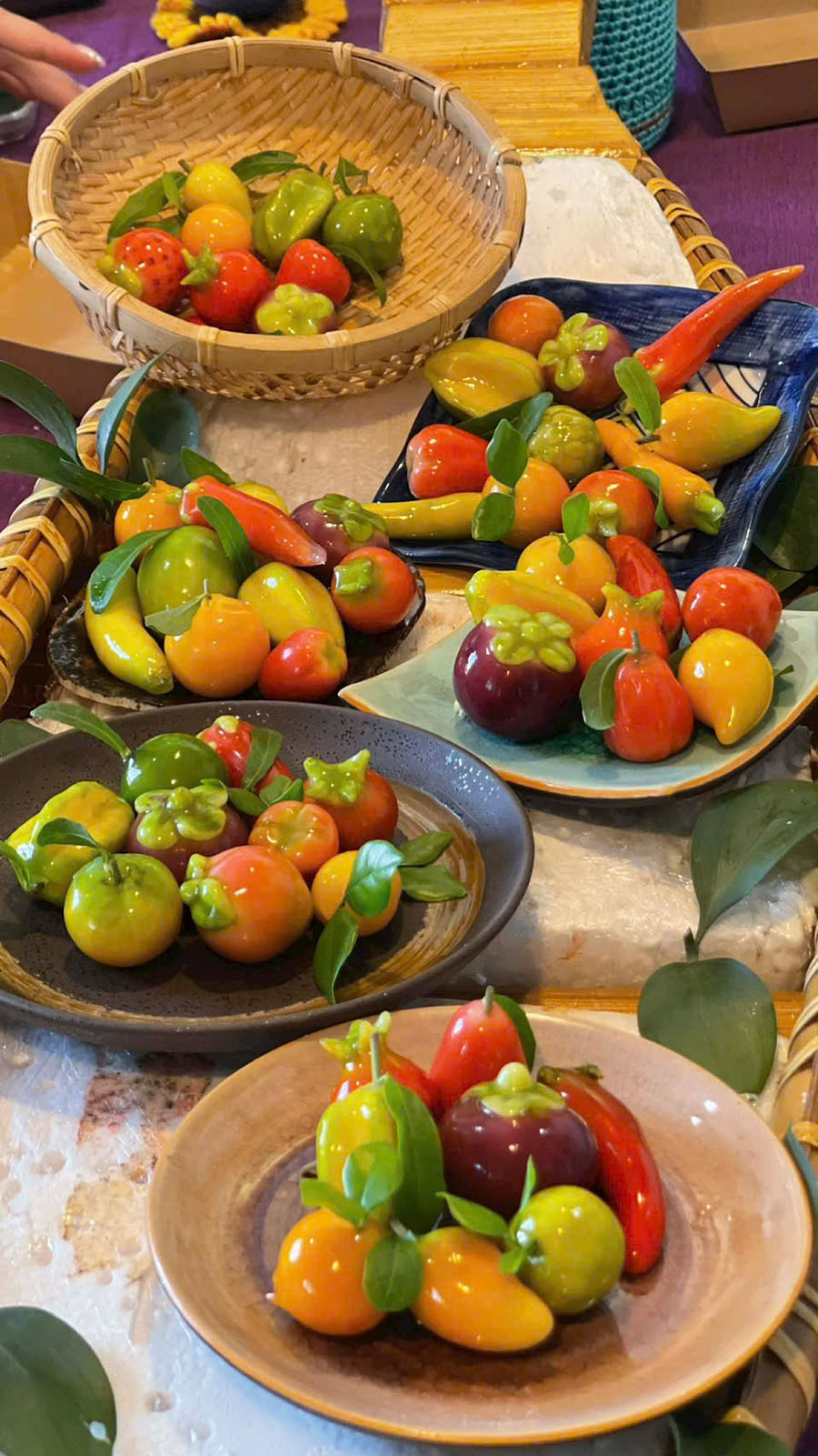
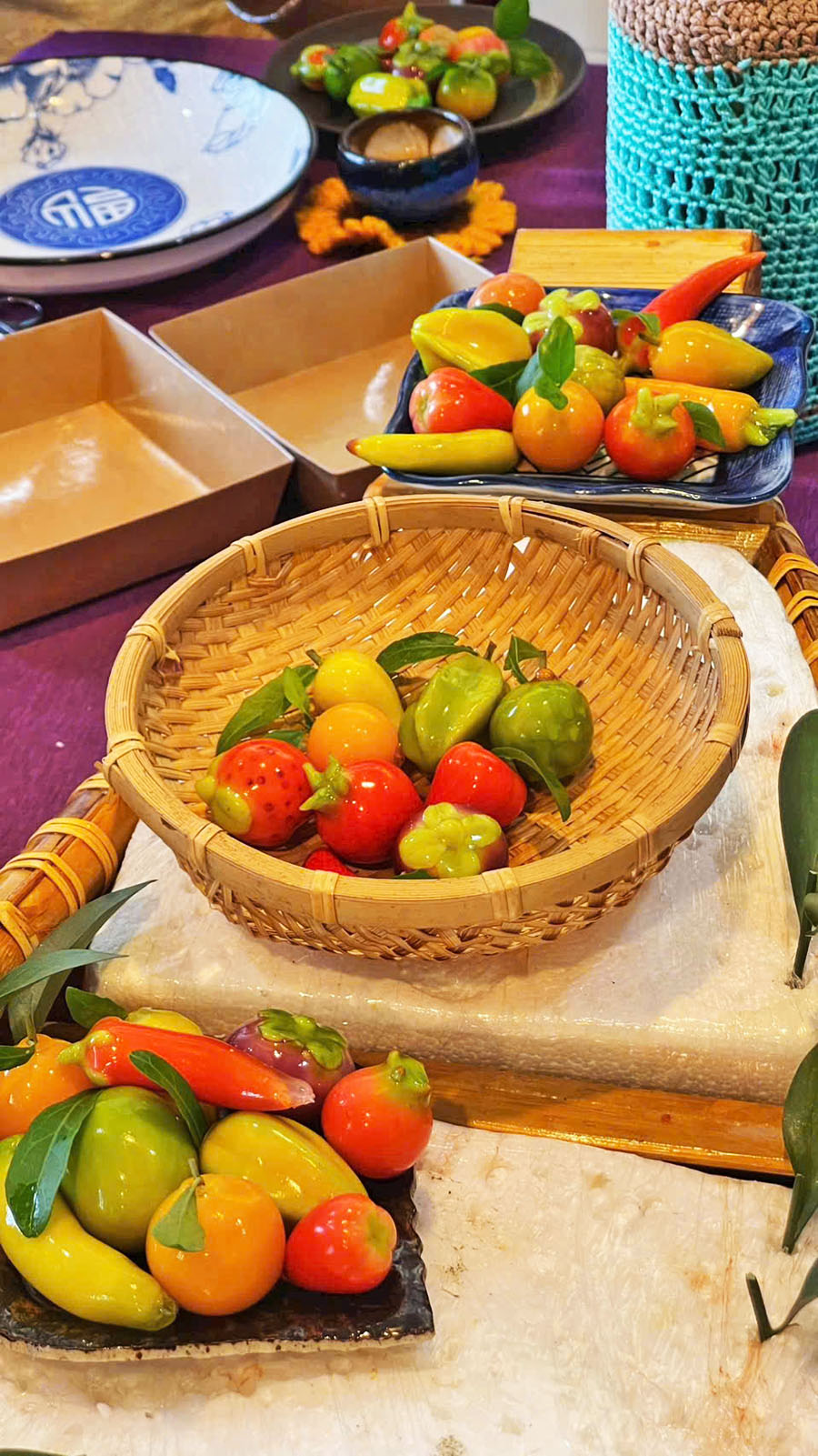
The main ingredients are mung beans, sugar, and natural food coloring. Although simple, creating these lifelike cakes requires meticulousness and skill. This cake is not only delicious but also visually appealing, often used during holidays, religious ceremonies, or as a gift. It represents a harmonious blend of visual and culinary art, reflecting the refined style of Hue.
Powdered face mask - a beauty secret of the Hue royal court.
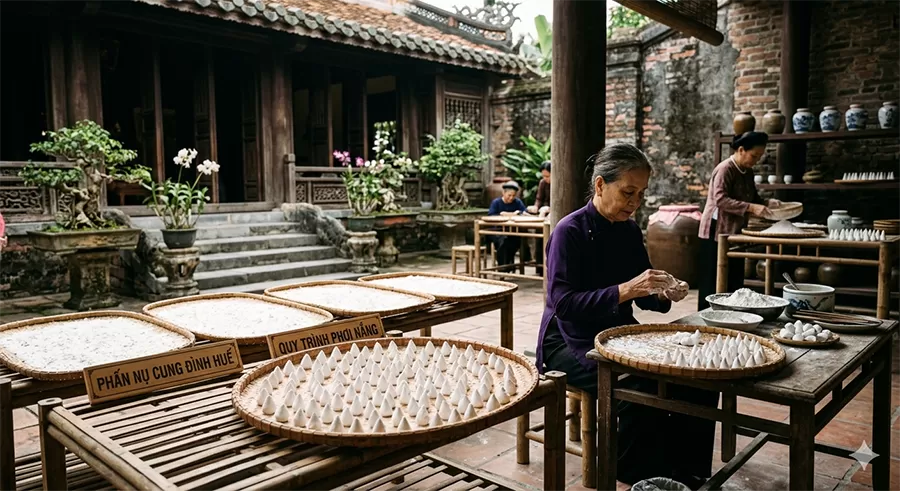
Besides its traditional craft villages and distinctive cuisine, Hue is also famous for its traditional face powder making – a beauty product deeply rooted in the ancient royal court. Face powder was once used in the Nguyen dynasty's imperial palace, a secret to helping concubines and ladies-in-waiting maintain their fair, smooth, and radiant skin.
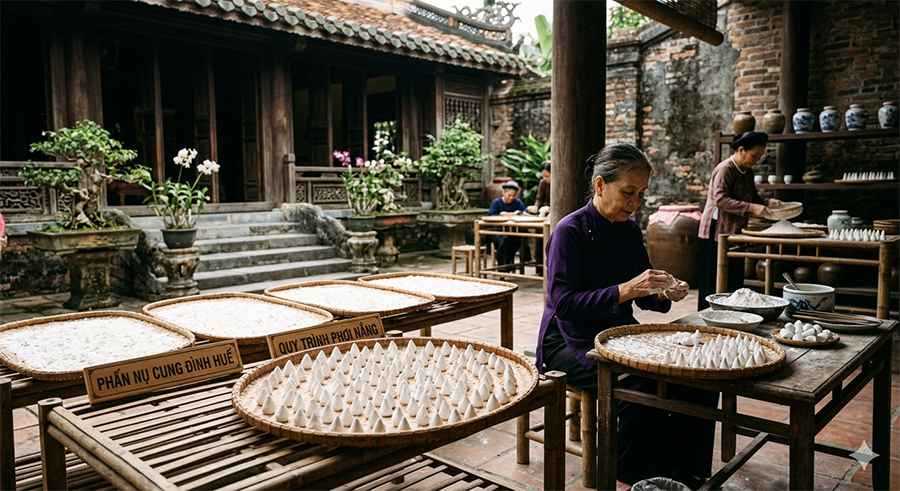
"Phấn nụ" is made entirely from natural ingredients such as kaolin, herbs, and pomelo flower water. The manufacturing process is quite elaborate: the ingredients are carefully filtered, cooked, then kneaded into small, bud-shaped pellets (called "nụ"), and then naturally dried. This is why the product has such a poetic name - "phấn nụ".
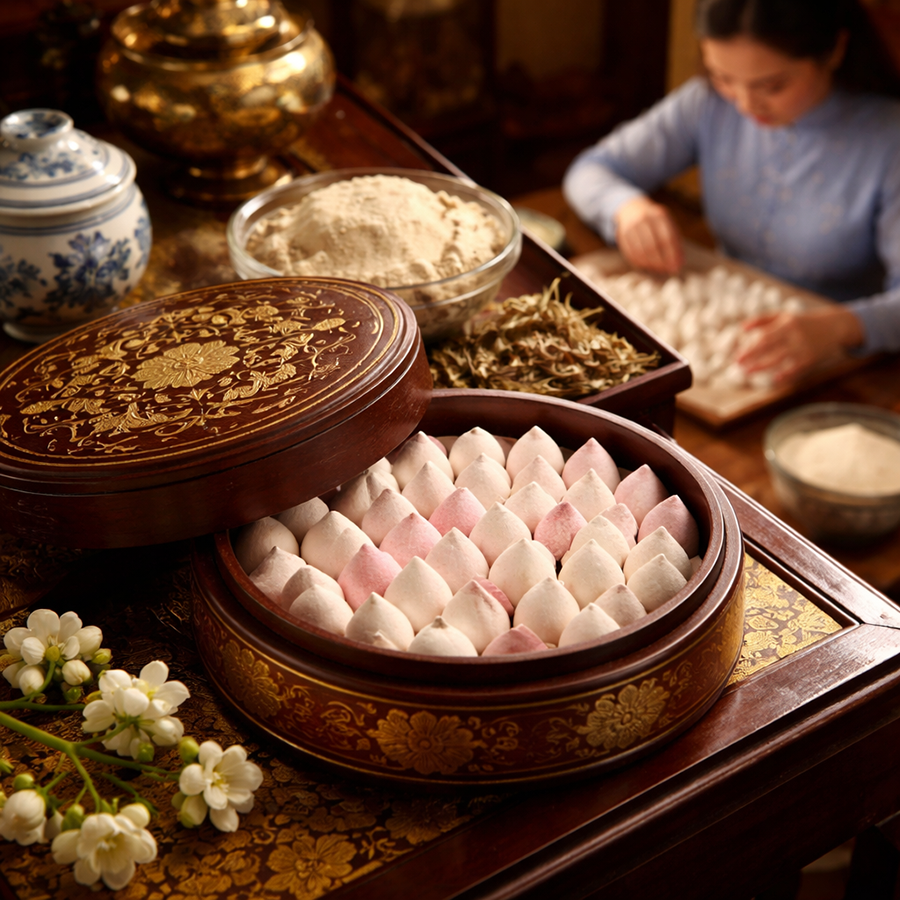
More than just a cosmetic, Hue's traditional face powder embodies the refined beauty culture of the people of Hue. When used, the powder creates a light, thin base, leaving the skin smooth and giving it an elegant, discreet beauty, in line with traditional aesthetic standards.
Today, the craft of making face powder is still preserved and developed by some establishments in Hue. The product not only serves beauty needs but also becomes a souvenir imbued with the unique character of the ancient capital. This is proof of the continuation of a beautiful tradition in modern life.
Preserving and promoting the value of traditional craft villages.
Traditional craft villages in Hue are not only production sites but also "living museums" of national culture. In the context of modernization, these crafts are facing many challenges such as shrinking markets and a shortage of young workers to carry on the tradition.
However, thanks to the attention of the government and the preservation efforts of the people, many craft villages have gradually innovated, combining them with experiential tourism for sustainable development. Preserving and promoting traditional values not only helps maintain Hue's cultural identity but also contributes to promoting the image of Vietnam to the world.